Your Wedding Is Not a Party for Your Guests — And It’s Time We Said It Out Loud
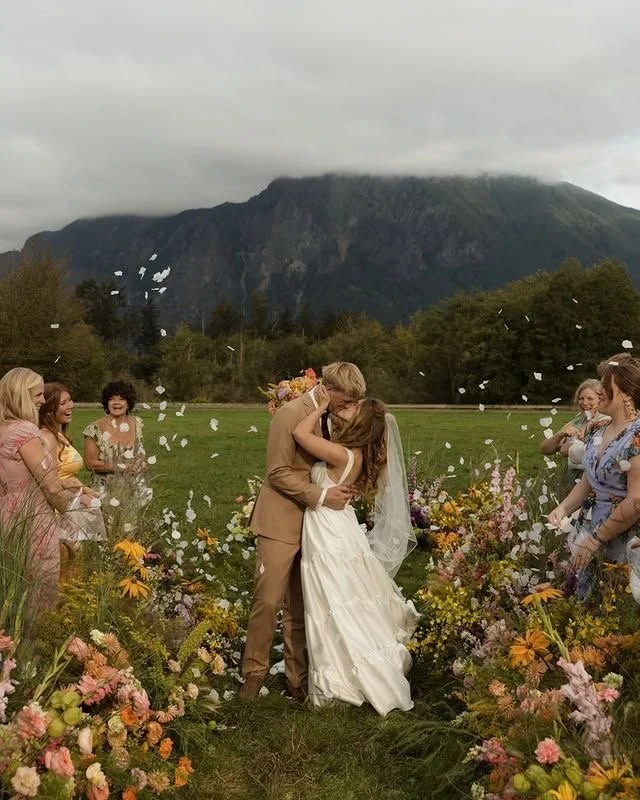
There is a conversation happening in nearly every engaged couple’s home right now.
It sounds something like this:
“My mom wants to invite people I barely know.”
“His family expects a full sit-down dinner for 200 guests.”
“We wanted something intimate, but now the list has grown and it doesn’t feel like ours anymore.”
And underneath every version of that conversation is a quiet, exhausting tension — the feeling that somewhere along the way, your wedding stopped being about you and became a performance for everyone else.
I want to say something plainly that the wedding industry consistently dances around.
Your wedding is not a party for your guests. It is a covenant between you, your person, and God.
And it is time we said that out loud.
How We Got Here
The wedding industry is a $57 billion dollar machine built, in large part, on the idea The wedding industry is a $57 billion dollar machine built, in large part, on the idea that your wedding day exists to impress. The venues. The place settings. The “experience” your guests will have. The photos that will live on Instagram long after the flowers have wilted.
And so couples — many of them faith-driven, intentional, deeply loving people — find themselves making decisions not from their own hearts, but from the outside in. Quietly accommodating. Stretching guest lists beyond what feels right. Choosing vendors and venues designed to satisfy expectations rather than reflect who they actually are.
Let me be clear before we go any further: this is not an argument against a beautiful, grand, or lavish wedding. If a full ballroom, 200 of your closest people, and a reception that goes until midnight is what your heart has always envisioned — that is a stunning, worthy, God-honoring celebration. A big wedding can be every bit as sacred and intentional as an intimate one.
This is not about the size of your day. It is about the source of your decisions.
The problem is not the production. The problem is when the production is built to satisfy someone else’s expectations rather than to reflect who you and your partner actually are before God. One of the most common wedding day regrets couples carry is this: they planned the wedding for other people instead of themselves. They were pulled in a dozen directions by family traditions, guest expectations, and outside opinions — and on the day itself, the choices felt disconnected from who they were as a couple.
That is a grief worth naming before it happens to you.
What the Pressure Actually Looks Like
It rarely comes from a bad place. That is the hardest part.
The family members who want to expand the guest list are doing it out of love and pride. The parents who have opinions about the venue or the tradition or the reception format are doing it because this day means something to them too. The friends who have expectations about being included — in the wedding party, at the rehearsal dinner, in the photos — they care about you.
But care and wisdom are not always the same thing.
When families contribute financially to a wedding, opinions often follow — and what begins as a generous gift can quietly shift decision-making power away from the couple. A financial contribution is not a ticket to co-ownership of your wedding day. And yet, without clear and loving communication, many couples find themselves slowly surrendering the details that matter most in order to keep the peace.
Worrying about how others might feel is an unnecessary pressure to carry into a day that is meant to feel grounding and affirming. Much of that worry is based on assumptions about how people will react rather than anything they have actually said. And yet it shapes decisions — sometimes the biggest ones.
The Numbers Behind the Tension
You are not alone in feeling this.
According to Zola’s 2025 First Look Report, 20% of couples reported that an uninvited guest showed up on their wedding day — an extra plus-one who was never on the list. 78% experienced no-shows from guests who had confirmed. The guest list — the one area where couples feel the most outside pressure — is also the one that causes the most unpredictability on the day itself.
The average wedding now costs $33,000, with couples spending approximately $284 per guest. Let that number settle for a moment. Every person added to your guest list at someone else’s insistence is a real financial decision with a real dollar amount attached.
And yet couples continue to stretch their budgets beyond their comfort zones to keep the peace — and regret it later. No wedding is worth beginning a marriage in financial stress to satisfy an expectation that was never yours to carry.
Helpful Resource: Before your guest list becomes a negotiation, get clear on your actual numbers. The Knot’s free Budget Advisor shows you the real per-guest cost in your specific area so you can have honest conversations from a place of clarity, not guilt.
A Word the Industry Won’t Say
Your guests are witnesses. They are beloved. They are people you have chosen to invite into one of the most sacred moments of your life.
But they are not the point.
You are.
The two of you — standing before God, making a covenant that will shape the rest of your lives — are the center of this day. Not the centerpiece arrangement. Not the entrée options. Not whether Aunt Carol approves of the venue or whether your college friends think the reception was lively enough.
A wedding is a marker of a new household forming its own values, rhythms, and authority. That is not a small thing. That is one of the most significant transitions of your adult life. And it deserves to be honored — not managed around the preferences of people who will go home that night and return to their own lives, while you begin yours.
What Scripture Says About This Day
If you are a woman of faith planning your wedding in the mountains of Colorado or along the sun-drenched venues of Central Florida, I want to invite you to anchor your planning in something more solid than other people’s expectations.
The Bible describes marriage as a covenant — a sacred, binding commitment made before God. Not a contract between two parties negotiating terms. A covenant. One that is holy. One that is witnessed by God Himself.
In Ephesians 5, the Apostle Paul connects marriage directly to the relationship between Christ and the Church — a profound mystery, a picture of the deepest love. Marriage mirrors God’s covenant relationship with His people, and Scripture is clear: these purposes extend far beyond personal happiness or social expectation.
That is what is happening on your wedding day.
Not a dinner party. Not a performance. Not an opportunity to satisfy everyone who has an opinion about how it should look.
A holy, once-in-a-lifetime threshold — between who you were and who you are becoming together, before the God who designed you for exactly this.
Plan it accordingly.
What It Looks Like to Reclaim Your Day
Reclaiming your wedding does not mean being unkind to your family. It does not mean ignoring the people who love you or bulldozing traditions that carry real meaning. It means something quieter and more intentional than that.
It means sitting down together — just the two of you — before any outside voice enters the room, and deciding what this day is actually for. What do you want to feel when you wake up that morning? What do you want to remember twenty years from now? What moments matter so deeply that no outside pressure could ever be worth sacrificing them?
Those answers become your anchor. And every decision — the guest list, the venue, the format, the timeline, the budget — flows from that anchor rather than from the loudest voice in the room.
Communicating openly and setting boundaries early saves stress and prevents regrets later. The best approach is transparency: let your family know which aspects you welcome their input on and where you need to make decisions as a couple. That clarity is not a wall. It is an act of love — for your family and for each other.
Helpful Resource: Read Creating Meaningful Moments: The Power of Thoughtful Wedding Details to explore how couples in Colorado and Florida are building intentional days that reflect who they actually are — not who they feel pressured to perform for.
Your Vision Is Valid — Whatever It Looks Like
Maybe you have always dreamed of a grand celebration. A breathtaking Colorado mountain venue filled with candlelight and florals that take your breath away. A ballroom in Central Florida with every person you love filling every seat. Dancing that goes late into the night. A full production that reflects just how big this love actually feels.
That is not too much. That is not unspiritual. That is not something to apologize for.
A beautiful, abundant, extravagant wedding can be one of the most intentional and faith-honoring celebrations imaginable — when it is built from the inside out. When the grandness of it reflects you, your story, and the God who wrote it. When every detail was chosen because it meant something, not because someone pressured you into it.
The question was never whether your wedding should be large or small, simple or elaborate, intimate or full of people.
The question is always: whose voice drove the decisions?
If the answer is yours — rooted in prayer, in partnership, in the values you both hold — then plan boldly and without apology, whatever that looks like. A 200-person celebration planned with full intentionality and faith at the center is every bit as sacred as a 20-person ceremony in a mountain meadow.
What you are protecting is not the size of your day. You are protecting the heart of it.
For the Couple Who Keeps Saying Yes When They Mean No
I see you.
You have been accommodating requests that don’t feel right. You have watched your wedding slowly transform from the intimate, faith-filled celebration you envisioned into something bigger, louder, and less like you with every compromise. And you are wondering if it’s too late to find your way back to what you actually wanted.
It is not too late.
But it does require a decision — a clear, loving, united one — to hold the line on what matters most. Not to be difficult. Not to be selfish. But to honor the sacredness of what this day actually is.
Couples who make decisions that feel true to who they are — even when it means letting go of other people’s expectations — are the ones who walk away from their wedding day feeling genuinely present and joyful. They don’t regret it. Not once.
The ones who gave their day away to keep the peace? They often do.
A Word From the Heart
My purpose at Sky’s The Limit is simple: to be the calm in the chaos. To carry the weight so you can be fully present in every moment of your day. To make sure that when you walk down the aisle — whether it’s under an open Colorado sky or inside a warmly lit Florida venue — you are not managing anything. You are simply there. Present. Joyful. Exactly where you are supposed to be.
Part of that work begins long before the wedding day. It begins with helping you get clear on what this day is actually for — and making sure every decision you make flows from that clarity rather than from outside pressure.
God designed this covenant to be sacred. The two of you standing before Him, making a promise that will outlast the flowers, the music, and the centerpieces — that is the whole point.
Your guests are blessed to witness it.
But it was never for them.
It was always for you — and for the One who brought you together in the first place.
Ready to plan a wedding that feels completely, unapologetically yours?
Schedule a consultation with Sky’s The Limit — it would be an honor to help you protect what matters most.
